Ayurvedic Treatment in Bangalore: Panchakarma, Back Pain and What to Expect at a Kerala-Style Centre
Wondering what ayurvedic treatment in Bangalore actually involves? This guide explains Panchakarma, how Kerala-style centres approach back pain, what happens at a first visit, indicative costs, safety points and how to check a practitioner’s qualifications before you book.
New India Connect Admin
Ayurvedic treatment in Bangalore usually starts with a consultation with a registered BAMS doctor, who assesses your body type, symptoms and lifestyle, then suggests diet changes, herbal medicines and therapies such as oil massages or Panchakarma. For back pain, Kerala-style centres often use warm oil treatments alongside exercise advice. Results vary, and Ayurveda should complement, not replace, medical care.
Long hours at a desk in Whitefield, a daily commute on Outer Ring Road, or simple stress can send many Bengalureans looking for an alternative to painkillers. Ayurveda is one option, but the terms are unfamiliar and prices are unclear. This guide explains Panchakarma, how Ayurveda is used for back pain, what a first visit looks like and how to check a practitioner before you book.
Quick Summary
Ayurveda is a traditional Indian system of medicine. A consultation comes first, and treatment is personalised.
Panchakarma is a structured set of cleansing therapies. It is not a single massage.
Kerala-style centres are known for warm medicated oil therapies, often done by trained therapists in a set routine.
For back pain, expect an assessment, oil-based therapies, herbal medicines and posture or exercise advice. No one can promise a cure.
Check that your doctor holds a BAMS degree and a valid state or national registration.
Costs vary widely. Ask for a written estimate of consultation, therapy sessions and medicines before you start.
What is ayurvedic treatment and how does it work?
Ayurveda is a traditional system of medicine from India. It looks at the whole person rather than one symptom. A practitioner considers your digestion, sleep, stress, work habits, diet and your prakriti (your body constitution as described in Ayurveda). The plan that follows may combine:
Aahara (diet): what to eat, avoid and when to eat.
Vihara (lifestyle): sleep, movement, work routine and stress habits.
Aushadha (medicines): herbal formulations, taken as tablets, powders, decoctions or oils.
Chikitsa (therapies): external treatments such as massage, steam, oil pouring and Panchakarma.
Two people with the same complaint can be given different plans. That is normal in Ayurveda. It is also why you should be wary of anyone who offers one fixed package for everybody.
What makes a Kerala-style Ayurveda centre different?
"Kerala-style" is a common phrase for a Kerala ayurveda centre in Bangalore. It generally refers to the therapy traditions of Kerala, where warm herbal oils, medicated powders and rice preparations are applied in set routines. Typical features include:
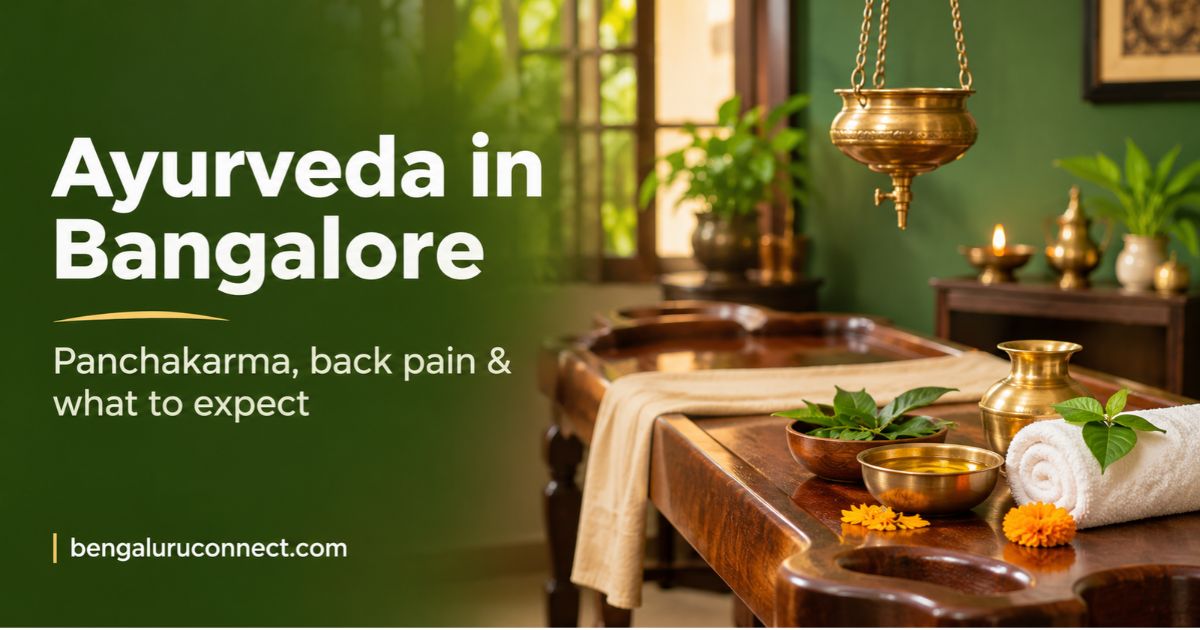
A dedicated therapy room, often with a wooden treatment table (droni).
Medicated oils chosen by the doctor, warmed before use.
Therapies done by trained therapists, sometimes two at once.
A quiet, structured session of roughly 45 to 90 minutes.
The label is not a quality guarantee, and some centres use it as branding only. Look at the doctor's qualifications and the way the centre explains its process, not the signboard. Verified Kerala-style options are listed on Bengaluru Connect, including Vedakshethra Kerala Ayurvedic Treatment Centre and Vaidyog. Check each listing for current details and contact them directly to confirm services.
What is Panchakarma, and what happens during it?
Panchakarma means "five actions". In classical Ayurveda it is a set of cleansing and balancing procedures. It is not a spa treatment, and it is not meant for everyone. A doctor decides whether it suits you, and in what form, after a consultation.
The three stages of a Panchakarma programme
Purvakarma (preparation): Usually oil massage (abhyanga) and herbal steam (swedana), sometimes with medicated ghee taken internally.
Pradhana karma (main procedures): One or more of the five classical actions, chosen by the doctor.
Paschat karma (aftercare): A gradual return to normal food and routine, often with a specific diet.
The five classical Panchakarma procedures
Procedure | What it involves |
|---|---|
Vamana | Therapeutic induced vomiting under medical supervision |
Virechana | Therapeutic purgation using herbal preparations |
Basti | Medicated enemas, using oil or herbal decoction |
Nasya | Medicated drops or oil administered through the nose |
Raktamokshana | Traditional bloodletting, used selectively and not offered at every centre |
Many "Panchakarma packages" advertised in the city are lighter programmes built around massage, steam and oil therapies. Ask exactly which procedures are included, who performs them and whether a doctor reviews you each day.
Ayurvedic treatment in Bangalore for back pain: what do centres offer?
Back pain is among the most common reasons people search for ayurvedic treatment for back pain, especially IT professionals, drivers and anyone who sits for long hours. Ayurvedic centres commonly offer the following, depending on your assessment:
Kati vasti: warm medicated oil held in a ring of dough on the lower back.
Abhyanga and swedana: oil massage followed by herbal steam.
Pizhichil: warm oil poured and gently massaged over the body.
Patra pinda sweda / Njavarakizhi: warm herbal or rice boluses applied with massage.
Internal medicines and diet advice: prescribed by the doctor.
Posture, yoga or exercise guidance: often the part that makes the difference over time.
Ayurvedic therapies are generally used to help manage stiffness and discomfort. They are not guaranteed to cure any condition. Research on individual therapies varies in quality, so treat claims of quick or permanent relief with caution.
When back pain needs a doctor first
See an allopathic doctor or go to an emergency department promptly if back pain comes with leg weakness, numbness, loss of bladder or bowel control, fever, unexplained weight loss, or follows a fall or accident. Do not start oil therapy before ruling these out.
What happens at your first visit?
A good first visit is mostly conversation. Here is a typical walkthrough:
Booking: Call or message the centre. Ask for the doctor's name, qualification and consultation fee in advance.
Registration: You fill in a form with your history, current medicines, allergies and past surgeries.
Consultation: The doctor asks about pain, digestion, sleep, appetite and daily routine. Expect questions that feel unrelated to your complaint. That is part of the Ayurvedic approach.
Examination: This may include pulse reading (nadi pariksha), checking your back and posture, and looking at the tongue.
Plan: The doctor explains the treatment, number of sessions, medicines, food to avoid and expected cost.
Trial session (optional): Some centres begin the first therapy the same day. You can also take the plan home and decide.
Bring old reports, scans, X-rays and a list of all medicines you take, including supplements. Wear loose clothes, avoid a heavy meal just before an oil therapy, and plan for traffic. Many people book therapy in the morning or at the end of the day, so you can go home and rest.
How much does ayurvedic treatment cost in Bangalore?
Ayurveda consultation cost depends on the doctor's experience, the area and whether it is a clinic or a residential centre. The figures below are indicative ranges for planning. They are not quotes. Always confirm before you book.
Item | Indicative range | What it depends on |
|---|---|---|
First consultation | Roughly ₹300 to ₹1,500 | Doctor's seniority, location, clinic or hospital setting |
Single therapy session (e.g. massage, kati vasti) | Roughly ₹800 to ₹3,500 | Type of therapy, oils used, session length |
Medicines (per month) | Roughly ₹500 to ₹3,000 | Number and type of formulations |
Multi-day Panchakarma programme | Can run into tens of thousands of rupees | Duration, stay or day-care, procedures included |
Ask whether the quote includes medicines, linen, food and follow-up reviews. Ask what happens if you stop partway through.
Is Ayurveda safe?
For many people, supervised Ayurvedic therapies and diet changes are well tolerated, but safety depends on the practitioner, the product and your health. Keep these points in mind:
Tell the doctor everything. Herbs can interact with prescription medicines, such as blood thinners, diabetes tablets and blood pressure drugs.
Be careful with herbo-mineral products. Some traditional preparations contain processed metals. Ask for the manufacturer's name and buy only from licensed sources with proper labelling.
Pregnancy, children and long-term illness need extra care. Some therapies and herbs are not suitable. For women's health concerns, a gynaecologist should be your first call. See our guide on how to choose a gynaecologist or women's health clinic in Bengaluru.
Do not stop prescribed medicines on your own. Discuss any change with your regular doctor.
Skip anyone who promises a guaranteed cure or tells you to abandon modern treatment.
How can you check a practitioner's qualifications? A quick checklist
BAMS degree (Bachelor of Ayurvedic Medicine and Surgery) from a recognised institution. Postgraduate doctors may add MD or MS (Ayurveda).
Valid registration with the Karnataka Ayurveda and Unani Practitioners' Board, or on the national register maintained under the National Commission for Indian System of Medicine (NCISM).
Registration number displayed in the clinic or shared on request. Note it and verify it with the issuing body if you are unsure.
Clear consultation process, with a written prescription and plan.
Transparent pricing before treatment starts.
Hygiene and privacy: clean therapy rooms, fresh linen, same-gender therapist options on request.
Honest claims: no "100% cure", no pressure to prepay for long packages.
To compare options near you, browse the healthcare category on Bengaluru Connect, then shortlist two or three centres and call each with the questions above.
Conclusion
Ayurvedic treatment in Bangalore can be a sensible part of a wider approach to back pain, stress and everyday wellbeing, as long as you choose a qualified doctor, understand the plan and keep your expectations realistic. Ask questions, compare costs, and keep your regular doctor informed. When you are ready to compare options, you can explore ayurveda centres and other healthcare providers on Bengaluru Connect and shortlist the ones that fit your area and budget.
This article is general information, not medical advice. Consult a qualified, registered medical practitioner about your condition before starting any treatment. Fees and services change, so confirm details with the centre.



Frequently Asked Questions
Share this post
Comments (0)
No comments yet. Be the first to comment!