Cost of Living in Bangalore in 2026: Rent, Food, Transport and Monthly Budget
Cost of living in Bangalore in 2026: monthly budgets for students, professionals and families, with rent by area, food, transport and PG costs.
Shailesh

The cost of living in Bangalore in 2026 is roughly ₹13,500–24,000 a month for a student in a shared PG, ₹30,000–58,000 for a single professional in a 1BHK, and ₹63,000–1,36,000 for a family in a 2BHK. Rent is the biggest expense, usually 35–50% of your budget.
Bengaluru is a city of many price zones. A PG in Electronic City and a flat in Indiranagar can differ by ₹20,000 a month. This guide breaks down rent by area, food, transport and everyday bills, so you can plan a realistic budget before you move or renew a lease.
Quick Summary
Student or fresher (shared PG): about ₹13,500–24,000 per month
Single professional (1BHK or single PG): about ₹30,000–58,000 per month
Family of three (2BHK): about ₹63,000–1,36,000 per month
Biggest cost: rent, which depends heavily on how far you live from your workplace and the Namma Metro line
Cheaper than Mumbai for housing in most comparable areas, with similar everyday food costs
All figures are estimates based on typical market ranges. Actual prices vary by locality, building and season.
What Is the Average Monthly Cost of Living in Bangalore?
There is no single average, because lifestyle and location change the numbers so much. The table below groups typical monthly expenses by three common lifestyle tiers. Treat it as a planning range, not a quote.
Expense | Lean (student, shared PG) | Comfortable (single professional) | Family (couple + 1 child) |
|---|---|---|---|
Housing | ₹7,000–12,000 | ₹15,000–30,000 | ₹30,000–60,000 |
Food and groceries | ₹3,000–5,000 | ₹6,000–10,000 | ₹12,000–20,000 |
Transport | ₹1,000–2,500 | ₹2,000–5,000 | ₹5,000–10,000 |
Utilities, internet, phone | ₹400–700 | ₹1,500–3,500 | ₹3,000–6,000 |
Education or childcare | Not applicable | Not applicable | ₹5,000–25,000 |
Health, leisure, miscellaneous | ₹2,000–4,000 | ₹5,000–10,000 | ₹8,000–15,000 |
Estimated total | ₹13,500–24,000 | ₹30,000–58,000 | ₹63,000–1,36,000 |
The family range is wide mainly because school fees vary enormously between schools. Housing and school choice together decide most of the difference.
How Much Is Rent in Bangalore by Area?
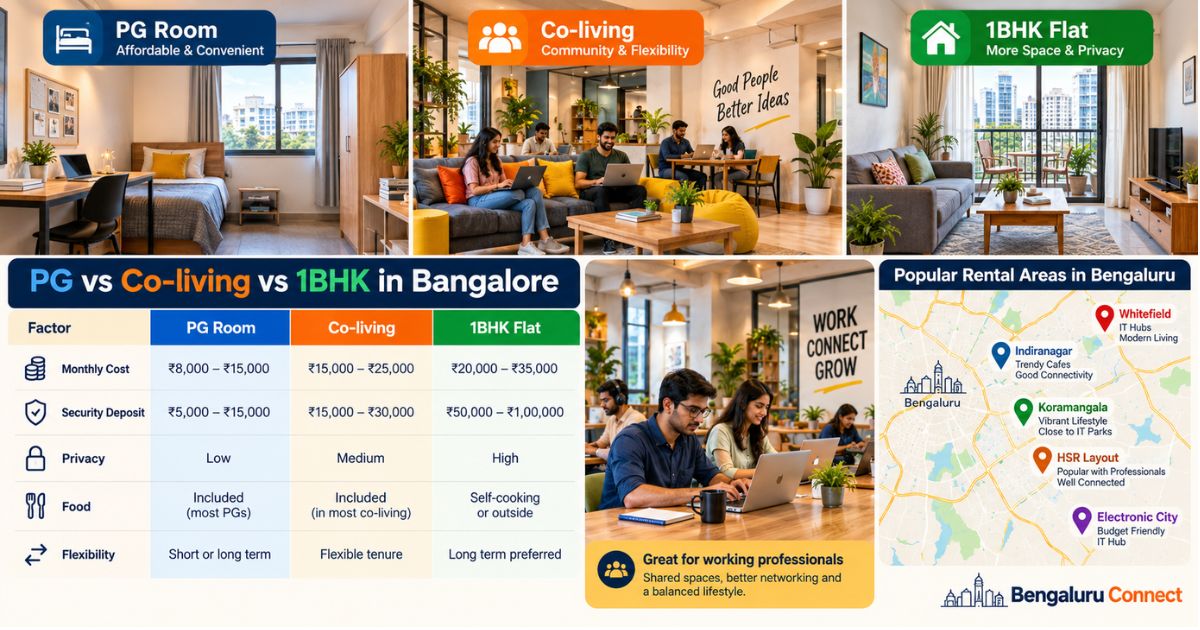
Location drives rent more than anything else. Areas close to large tech parks, with good metro or Outer Ring Road access, cost more. Areas on the city's edge cost less but add commute time. The table compares typical 1BHK rents across popular areas.
Area | Typical 1BHK rent (per month) | What it's known for |
|---|---|---|
Indiranagar | ₹28,000–45,000 | Cafés, nightlife, central location |
Koramangala | ₹25,000–42,000 | Startups, restaurants, strong PG market |
HSR Layout | ₹20,000–35,000 | Popular with young professionals |
Bellandur and Sarjapur Road | ₹20,000–35,000 | Close to ORR tech parks, gated communities |
Whitefield | ₹17,000–30,000 | IT corridor, long distance from central areas |
Marathahalli | ₹16,000–28,000 | ORR access, mixed budgets |
JP Nagar and Jayanagar | ₹16,000–30,000 | Residential, established, family-friendly |
Hebbal and Yelahanka | ₹14,000–25,000 | North Bengaluru, airport side |
Electronic City | ₹12,000–22,000 | Lower rents, IT campuses |
These are indicative ranges, not guaranteed prices. Furnished flats, new gated societies and flats near metro stations usually sit at the top of the range. You can compare neighbourhoods on our Bengaluru locations page and browse current rentals in real estate listings.
What Is the Security Deposit in Bangalore?
Deposits in Bengaluru are often higher than in many other cities. Landlords commonly ask for a few months of rent, and some ask for more. Negotiate before signing, and get the refund terms written into the rental agreement. Also budget for brokerage, if you use an agent, and a one-time move-in cost.
How Much Does a PG Cost in Bangalore?
PG cost in Bangalore depends on sharing type, food, and location. As a rough guide:
Triple or double sharing: about ₹6,000–12,000 per month
Single occupancy: about ₹10,000–25,000 per month
Premium co-living with amenities: can go higher, especially in Koramangala, Indiranagar and HSR Layout
Check what is included. Meals, Wi-Fi, laundry, housekeeping and power backup all change the real monthly cost. Women looking for safe, verified options can start with our girls PG listings. If you are considering HSR Layout, read our guide to the best PG and co-living options in HSR Layout.
How Much Do You Spend on Food in Bangalore?
Food spending depends on whether you cook, eat at home, or order in. Bengaluru has a wide spread of options, from quick tiffin at a darshini to full restaurant meals.
Cooking at home: groceries for one person typically run ₹4,000–8,000 per month, depending on diet and brands.
Eating out regularly: a simple meal can cost a few hundred rupees, and restaurant meals in popular areas cost more.
PG with meals: often the cheapest option for students, since food is bundled into the rent.
Food delivery: convenient, but delivery fees and packaging add up quickly if you order daily.
A practical split for professionals is to cook some meals, eat out a few times a week, and keep delivery for busy days.
What Does Transport Cost in Bangalore?
Traffic is part of life here, so transport affects both money and time. Your cost depends on how you commute.
Namma Metro: usually the cheapest and most predictable option along its lines. Check routes and fares on our Bengaluru metro page.
BMTC buses: affordable for daily travel, with passes available for regular commuters. See routes on our Bengaluru bus page and confirm current pass prices with BMTC.
Autos and cabs: flexible but pricey for daily commutes. Budgets of ₹2,000–6,000 a month are common for people who use them often.
Own bike or scooter: fuel is often ₹1,500–3,000 a month, plus parking, service and insurance.
Living close to a metro station or your workplace can cut transport costs and save an hour or more of travel daily, which often justifies slightly higher rent.
What Are the Other Monthly Expenses in Bangalore?
Electricity (BESCOM): roughly ₹800–2,500 a month for most flats, more with heavy air conditioner use.
Internet: about ₹600–1,200 a month for a home broadband plan.
Apartment maintenance: in gated societies, often ₹1,500–5,000 a month, sometimes more.
Water and cooking gas: varies by building and usage.
Domestic help: cooks, cleaners and maids are usually paid per task, so costs depend on how many you use.
Bangalore vs Mumbai Cost of Living: Which Is Cheaper?
In general, housing is the main difference. Bangalore vs Mumbai cost of living comparisons usually show Mumbai as more expensive for rent, especially in central areas, while Bengaluru offers more space for the money. Everyday groceries, eating out and transport are closer between the two cities, though Mumbai's local trains can make commuting cheaper for some routes.
Bengaluru's trade-offs are traffic and the spread-out layout of the city. Pick a home near your workplace or a metro line to avoid high commute costs. For precise comparisons, check recent cost indexes and current listings in both cities before deciding.
What Salary Do You Need to Live in Bangalore?
A common rule is to keep rent under 30–40% of your take-home pay and save at least 20%. Using the budget tiers above, a rough guide to in-hand monthly salary is:
Lean lifestyle (shared PG): about ₹20,000–32,000 take-home
Comfortable single living: about ₹38,000–72,000 take-home
Family with one child: about ₹80,000–1,70,000 take-home, depending on school and housing choices
These are planning estimates, not minimum requirements. Note that annual CTC and monthly in-hand pay are different, so always plan around take-home salary.
How Can You Reduce Your Monthly Expenses in Bangalore?
Choose location by commute, not just rent. A cheaper area far from work can cost more in time and transport.
Share where it makes sense. Double or triple sharing in a PG or flat can cut housing costs sharply.
Check what the rent includes. Food, Wi-Fi and maintenance can change the real total.
Negotiate the deposit and lease terms before you sign, and get everything in writing.
Use the metro and buses for daily travel and keep cabs for late nights or emergencies.
Track spending for the first two months and adjust your budget based on real numbers.
Conclusion
The cost of living in Bangalore in 2026 depends mostly on where you live and how you commute. Rent sets the baseline, while food, transport and bills add a fairly predictable layer. If you plan around your commute and compare the full cost of each option, you can live well at almost any budget.
When you're ready to compare options, you can explore PGs and rentals by area on Bengaluru Connect and find a place that fits your monthly budget.
Disclaimer: All prices in this article are estimated ranges for planning and are not quotes or guarantees. Please verify current prices with landlords, PG operators and service providers before making decisions.

Frequently Asked Questions
Share this post
Comments (0)
No comments yet. Be the first to comment!