Wall Dampness and Seepage in Bangalore Homes: Causes and Fixes Before Repainting
Walls turning damp or peeling after the monsoon? Learn what causes seepage in Bangalore homes, the right repair order, and how to fix it before you repaint.
Shailesh
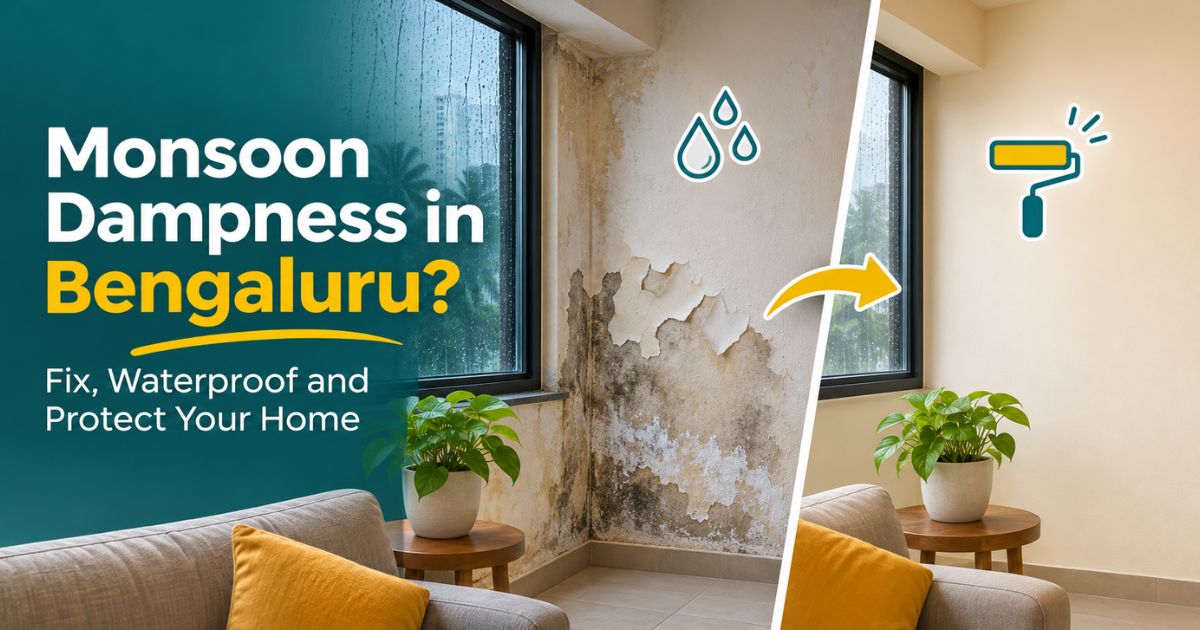
Wall dampness in Bangalore homes usually comes from rain entering through the terrace, external walls or cracks, or from leaking pipes and bathrooms. Treatment means finding the water source, fixing it, letting the wall dry fully, removing damaged plaster and salts, then priming and repainting. Painting over damp walls only hides the problem briefly.
Good wall dampness treatment in Bangalore starts before the paint tin is opened. Our weather is mild, but the monsoon can be heavy, and many apartments and independent houses have ageing terraces, hairline cracks and old plumbing. This guide helps you work out why your walls are damp, what to fix first, and what to do yourself versus leave to professionals.
Quick Summary
Never repaint a damp wall. Fix the water source first.
Peeling paint, white powder (efflorescence) and dark patches are signs of moisture, not just a paint problem.
The right order is: diagnose, stop the water, dry, repair plaster, waterproof, prime, paint.
Terrace and external wall leaks are the most common cause of seepage in walls during the monsoon.
Get at least two or three written quotes that name the method, materials and warranty.
Why Do Walls Get Damp in Bangalore Homes?
Bangalore gets most of its rain during the southwest monsoon (roughly June to September) and a second spell in October and November. Water finds any weak point: a cracked terrace slab, a gap around a window frame, a loose sunshade or a joint in an old pipe. Because the city has a mix of old independent houses in areas like Basavanagudi and Jayanagar and newer apartments in Whitefield, HSR Layout or Sarjapur Road, the causes differ from one home to the next.
Dampness is not always rain. A leaking bathroom pipe, an overflowing sump line or even constant condensation in a poorly ventilated room can keep a wall wet all year.
How Can You Tell What Is Causing the Damp?
Look at where the damp appears and when it shows up. The pattern usually points to the cause.
What you see | Likely cause | Usual fix |
|---|---|---|
Stains or patches on the top-floor ceiling and upper walls, worse after rain | Terrace slab or parapet leakage | Terrace waterproofing, crack sealing, proper slope to drains |
Damp patches on an outer-facing wall only during the monsoon | Cracks in external plaster, bad paint film, gaps near windows | Crack filling, external waterproof coating, sealant at joints |
Damp near the base of ground-floor walls, rising a few feet | Moisture rising from the ground (rising damp) | Professional damp-proofing assessment, plaster removal, treatment |
Damp on a wall shared with a bathroom or kitchen, all year round | Leaking pipe or failed bathroom waterproofing | Plumber to repair the leak, then re-do waterproofing |
White powdery deposits on the wall | Efflorescence: salts carried out by moving moisture | Dry brushing, find the moisture source, then treat and prime |
Black or green spots in corners, behind wardrobes | Condensation and poor ventilation | Improve airflow, anti-fungal treatment, then repaint |
What Is Efflorescence on Walls?
Efflorescence is the white, chalky powder you sometimes see on brick or plaster. Water travels through the wall, dissolves natural salts and leaves them on the surface when it evaporates. It is a warning sign that moisture is moving through the wall. Brushing it off is fine, but it will come back until the water source is dealt with.
Why Does Seepage in Walls Get Worse in the Monsoon?
Seepage in walls often looks minor in summer because dry weather hides it. When the monsoon begins, rainwater keeps hitting the same weak spots, and the wall stays wet for weeks. Old paint also loses its ability to repel water over time, so external walls absorb more moisture. That is why many people notice peeling and stains only after the first heavy rain.
What Is the Correct Order of Repair Before Repainting?
Doing the steps out of order is the most common reason damp comes back. Follow this sequence.
Diagnose the source. Check the terrace, external walls, windows, pipes and bathrooms. If it is not obvious, ask a waterproofing professional to inspect it.
Stop the water. Repair leaking pipes, clear blocked terrace drains, and seal visible cracks and joints.
Let the wall dry. Give it time to dry out fully. Drying can take from a few days to several weeks depending on how wet it is and the weather. A wall that feels dry to touch may still hold moisture inside.
Remove damaged material. Scrape off peeling paint, loose plaster and salt deposits. Hollow-sounding plaster should be cut out.
Repair the plaster. Patch with suitable cement or polymer-modified mortar and let it cure properly.
Apply waterproofing where needed. This may be a coating on the terrace or external wall, a membrane in wet areas, or a damp-proof treatment on the affected wall.
Prime the surface. Use a primer suited to the problem, such as an alkali-resistant or damp-resistant primer.
Paint. Apply two coats of a good quality paint once the primer has dried. This is the final step, not the first.
Why Is Waterproofing Before Painting So Important?
Paint is a surface finish, not a waterproofing system. Waterproofing before painting protects the structure behind the paint. If you repaint over a damp wall, moisture pushes the new paint off, often within one monsoon season. You then pay twice: once for the paint and again to scrape and redo it.
How Does Terrace Waterproofing Help?
Most top-floor and independent house leaks start on the roof. Terrace waterproofing creates a continuous layer that stops water from entering the slab. A good job normally includes cleaning the surface, repairing cracks, treating the joint between the floor and parapet, applying the waterproofing system, and making sure the slope sends water to the outlets. Skipping the parapet joints is a common mistake.
How Much Does Damp Wall Repair Cost in Bangalore?
Damp wall repair cost depends on the cause, the area, the method and the condition of the wall. The ranges below are only indicative and are not fixed rates. Always get written quotes after a site visit.
Work | Indicative range (verify before publishing) | What affects the price |
|---|---|---|
Terrace waterproofing | Approx. ₹40 to ₹150 per sq ft | Method, number of coats, surface condition, warranty |
External wall crack repair and waterproof coating | Approx. ₹20 to ₹80 per sq ft | Crack severity, height, scaffolding or access needs |
Interior damp patch treatment (plaster repair, primer, paint) | Approx. ₹30 to ₹100 per sq ft | Depth of damage, plaster repair, paint quality |
Bathroom waterproofing | Varies widely by size and whether tiles are removed | Tile removal, number of layers, plumbing repair |
Ask each contractor to list the materials, number of coats, curing time, any warranty and what is excluded. The cheapest quote is not always the lowest-cost option if the work fails after one monsoon.
Can You Fix Damp Walls Yourself or Should You Hire a Professional?
Situation | DIY possible? | Better with a professional |
|---|---|---|
Small patch of peeling paint from condensation | Yes: clean, ventilate, use anti-fungal wash, repaint | Only if it keeps returning |
Efflorescence on a small area | Brush off and monitor | If it reappears or spreads |
Visible hairline crack on an external wall | Possibly, with a suitable sealant | If cracks are wide, long or keep widening |
Terrace leakage or large ceiling stains | No | Yes: needs proper surface preparation and a waterproofing system |
Rising damp on ground floor | No | Yes: needs assessment and specialist treatment |
Leaks from pipes inside walls | No | Plumber first, then wall repair |
When Is the Best Time to Treat Damp Walls in Bangalore?
The drier months before the monsoon, typically February to May, are usually the best time, because surfaces dry faster and waterproofing cures properly. If you discover a leak during the rains, a temporary fix can limit damage, and the full repair can wait for a dry spell. Planning early also helps because good contractors get busy just before the monsoon.
How Do You Find the Right Painter or Waterproofing Pro in Bangalore?
Start by browsing verified local painters in Bangalore and comparing what each offers. If you want a company that lists both painting and waterproofing services, you can look at PaintMyWalls on Bengaluru Connect and check its details before contacting them. Living in the east of the city? See painters in Whitefield for options near you.
When you speak to contractors, ask:
Will you inspect the property before giving a quote?
How will you find the source of the damp?
Which products and how many coats will you use?
How long is the warranty, and what does it cover?
Will you share photos of the work in progress?
Conclusion
Lasting wall dampness treatment in Bangalore comes down to one rule: fix the water problem first, paint last. Identify the cause, repair the surface, waterproof where needed, and only then repaint. If the problem looks bigger than a small patch, get a professional inspection. When you are ready, compare local pros on Bengaluru Connect and get quotes from painting and waterproofing professionals before the next monsoon arrives.
Last verified: November 2026. Costs and methods change, and every home is different. For structural cracks or persistent leaks, consult a qualified waterproofing contractor or structural engineer.

Frequently Asked Questions
Share this post
Comments (0)
No comments yet. Be the first to comment!