
A Festival Finds the Common Thread Between Bengaluru and Bali
'Bali in Bengaluru,' running October 1–18 across 14 venues, brings Balinese and Indian retellings of the Ramayana and Mahabharata together through dance, music, shadow puppetry and workshops, anchored by scholar-performer I Wayan Dibia and curator Praveen D Rao.
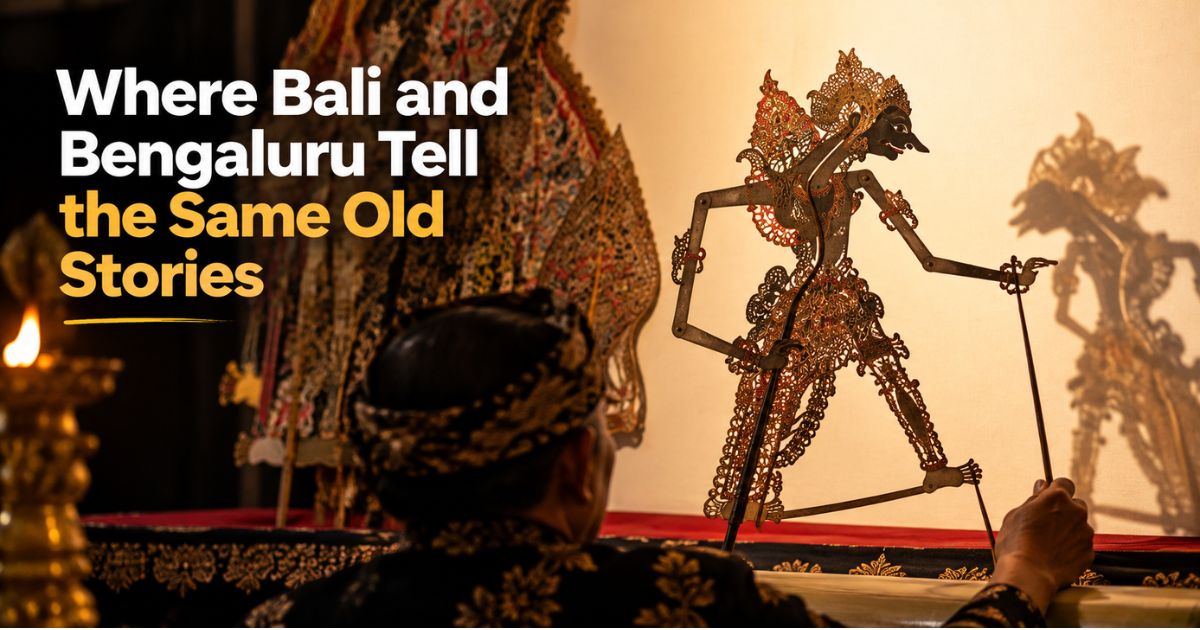
Most people know Bali for its beaches. Few know that the island has been retelling the Ramayana and Mahabharata in its own voice for centuries, through forms of dance, puppetry and music that look almost nothing like what you'd see in a Bengaluru living room during Diwali and yet come from the same stories. "Bali in Bengaluru," a transnational cultural festival running from October 1 to 18 across 14 venues in the city, is built entirely around that overlap.
The premise is simple enough to explain in a sentence, even if the festival itself is anything but simple to pull off: take two cultures that both grew up on the same epics, and put their very different ways of telling those stories side by side.
Same stories, different languages of the body
Bengaluru audiences are used to the Ramayana and Mahabharata arriving through Kannada theatre, Yakshagana, or television serials. In Bali, the same narratives survive through Kecak the hypnotic, chest-deep chant performance built around dozens of men in a circle through Gamelan orchestras, and through wayang, the shadow puppetry tradition that has carried Balinese storytelling for generations.
The festival's organisers are betting that seeing these forms next to each other, rather than reading about them separately, makes the kinship obvious in a way description can't. Workshops, performances and discussions are spread across the 18-day run, touching venues that include Orion Mall and spaces around JP Nagar, with a dedicated centre on Kanakapura Main Road hosting workshops and a performance built around Balinese puppetry specifically.
The people behind the bridge
The Balinese side of this exchange is anchored by I Wayan Dibia, a performer and scholar whose name carries real weight in the world of traditional Balinese arts. On the Bengaluru side, musician and curator Praveen D Rao who has collaborated with Dibia before this festival is one of the people shaping how the programme comes together.
"Our art forms may be different, but the stories they tell are similar," Rao said, describing the instinct behind the festival in about as few words as the idea needs. It's not a grand claim about cultural unity; it's closer to an observation that two very different places independently decided the same old stories were worth telling, over and over, in their own ways.
Why a festival like this lands differently in Bengaluru
Bengaluru has no shortage of cultural programming, but most of it either stays firmly within Indian traditions or imports Western contemporary art. A festival built specifically around India-Indonesia overlap and around classical/folk forms rather than gallery-style contemporary work is a genuinely different kind of offering, and one that doesn't come around often.
For residents with an interest in dance, music, puppetry or comparative mythology, 18 days and 14 venues means there's room to catch more than one event without having to clear an entire weekend for it. Workshops in particular including the Balinese puppetry sessions at the Kanakapura Road venue suggest the festival isn't only about watching performances but about actually learning a piece of the craft, however briefly.
What we don't know yet
Coverage of the launch hasn't listed a full day-by-day schedule, ticket prices, or whether workshops require separate registration from performances. Given the festival is already underway, anyone interested should check the official channels directly rather than waiting for a complete programme to surface secondhand.
Details and registration are available at bali-in-blr.paramfoundation.org, or by phone at 90350 34725.
Bengaluru residents looking for more happening around the city this month can check our Bengaluru events listings, and those interested in the city's cultural venues can browse our community page for more.
Source
Source: Deccan Herald, 1 October 2026.