
Bengaluru's Pixxel Raises $100 Million, India's Largest-Ever Spacetech Funding Round
Bengaluru-based Pixxel has raised $100 million in Series C funding, the largest-ever round for an Indian space-tech company, led by Temasek and Seraphim Space. The investment will expand the company's satellite manufacturing and Earth-intelligence capabilities.
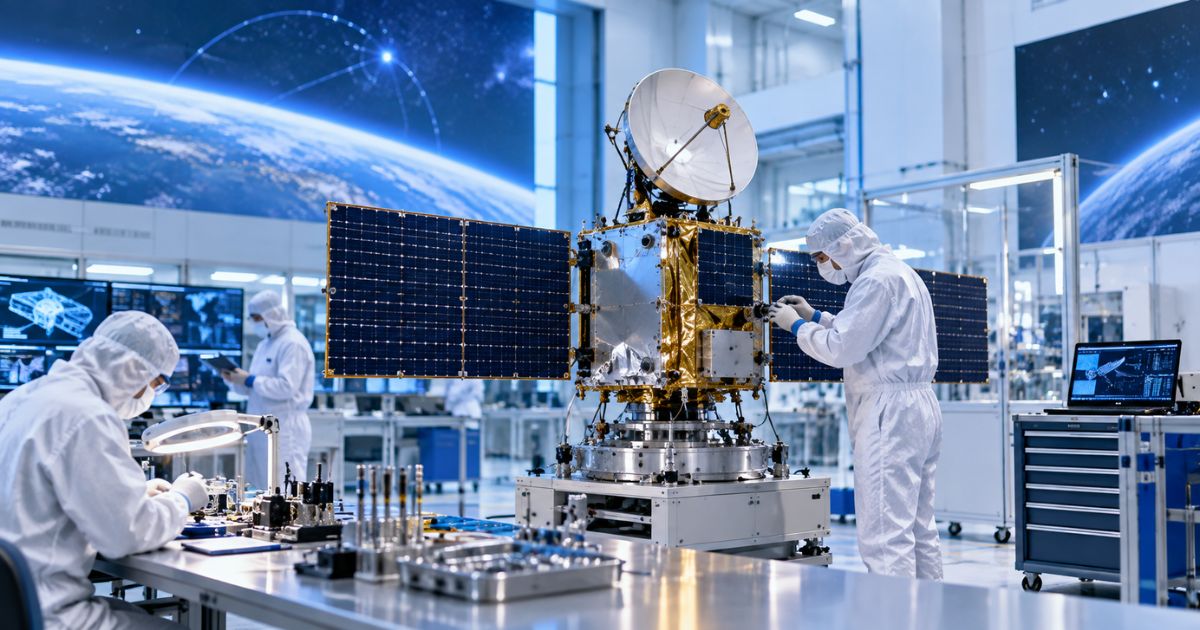
Bengaluru-headquartered space technology company Pixxel has closed a $100 million Series C funding round, the largest single investment ever raised by an Indian space-tech company. The round, announced on 7 September 2026, was co-led by Singapore's Temasek and UK-based Seraphim Space, and pushes Pixxel's total funding to date to $195 million.
For a city that has built its global reputation largely on software and IT services, the deal is a reminder that some of Bengaluru's most ambitious engineering work now happens in satellite clean rooms rather than server rooms. Pixxel designs, builds and operates its own hyperspectral satellites, and much of that manufacturing and engineering work is based in the city.
What Happened
Pixxel confirmed the close of its Series C round on 7 September 2026, with the funding co-led by Temasek, the Singapore state investment company, and Seraphim Space, a UK-based space-focused investment firm. New investors 360 ONE Asset and IMM Investment joined the round, alongside returning backers Radical Ventures and growX Ventures.
The $100 million raise takes Pixxel's total funding since its founding to $195 million and reportedly values the company at up to $500 million. Company statements describe the round as the largest single fundraise in the history of India's private space-technology sector.
Pixxel said the capital will be deployed across four broad priorities: expanding its Honeybee hyperspectral satellite constellation into new sensing bands, adding capabilities such as synthetic aperture radar and high-resolution optical imaging, scaling up its Aurora Earth-intelligence software platform, and increasing satellite production capacity at its Gigapixxel manufacturing facility.
Why This Matters for Bengaluru
Space technology remains a relatively young sector in India, and large, credible international investors putting serious money into a Bengaluru-based company sends a signal beyond Pixxel itself. It tells global capital markets that deep-tech and hardware engineering companies headquartered in the city not just software product firms can compete for major funding rounds.
It also reinforces a pattern that has been building through 2026: Bengaluru's startup ecosystem is increasingly diversifying beyond enterprise software and consumer apps into harder, capital-intensive sectors such as space technology, quantum computing and advanced manufacturing. For a city keen to be seen as more than just an IT hub, that diversification matters for its long-term economic identity.
Impact on Businesses, SMEs and Local Talent
A funding round of this scale does not translate into headlines alone. Expanding satellite manufacturing capacity typically means more engineering, fabrication and testing roles, along with demand for specialised component suppliers and precision manufacturing partners many of whom are smaller Bengaluru-based firms that service the aerospace and electronics supply chain.
The deal also adds to Bengaluru's credentials as a hub for advanced engineering talent, which can help the city attract further global investment into hardware and deep-tech startups, not just software ones. Entrepreneurs and engineers considering a move into hardware or space-adjacent ventures now have a well-funded, high-visibility local example to point to.
Key Details
Pixxel raised $100 million in a Series C round, announced 7 September 2026
Round co-led by Temasek (Singapore) and Seraphim Space (UK)
New investors: 360 ONE Asset and IMM Investment; returning investors include Radical Ventures and growX Ventures
Total funding raised to date: $195 million
Described as the largest-ever funding round for an Indian space-technology company
Funds earmarked for satellite constellation expansion, new sensing technologies, the Aurora software platform, and Gigapixxel manufacturing capacity
What Happens Next
Pixxel has said it will use the fresh capital to expand its satellite manufacturing operations and broaden its sensing capabilities over the coming years, building on its existing hyperspectral satellite constellation. As those plans move from funding announcement to execution, the pace of hiring and supplier engagement in and around Bengaluru will be worth watching for local businesses in engineering, electronics and precision manufacturing.
Conclusion
Pixxel's $100 million Series C is a significant vote of confidence from major global investors in a Bengaluru-built space technology company, and it marks a new high point for India's space-tech sector. For Bengaluru, it is another data point in the city's gradual shift from a software-first reputation toward becoming a genuine hub for deep-tech and advanced manufacturing as well.
Entrepreneurs and professionals tracking the city's expanding startup ecosystem can find more Bengaluru-based ventures and updates through Bengaluru Connect, while technology businesses and service providers supporting this growing sector are listed in the technology business directory. Founders exploring how to set up or register a company in the city may also find this guide to starting a business in Bangalore useful. For more positive, verified local updates, visit the Bengaluru Connect news section.